When people ask me what I do, the short answer is “I provide music for events.” The longer, truer answer is that I spend most of my time figuring out exactly what kind of music a particular room, on a particular night, with a particular crowd, actually needs — and then building a set that delivers it without anyone noticing the thinking behind it.
I’ve been doing this for a long time. I led a swing and soul big band in the UK for about twenty years before moving back to Israel in 2023, and in that time I learned one thing above almost everything else: there is no single “right” sound for an event. There’s only the right sound for this event.
This guide is my attempt to lay out, plainly, how I think about live music for events — so that if you’re planning one, you know what questions to ask and what to expect.
Why Live Music Changes the Room
A good playlist can fill silence. A good band changes the temperature of a room. The difference isn’t really about volume or polish — it’s about response. A live band reads the crowd in real time: slows down when people are still arriving, lifts the energy when the dance floor needs a push, drops into something quieter when speeches are about to start. No pre-made playlist does that.
That doesn’t mean live music is always the answer. Sometimes background music for an event genuinely should sit underneath conversation and stay out of the way — more on that below. The point is simply that “music for events” isn’t one product. It’s several different jobs, and the first step is working out which job your event actually needs done.
The Different Jobs Music Does at an Event
Reception and welcome music. The first ten or fifteen minutes set the tone before most guests have even sat down. I’ve written more specifically about this in my piece on reception music and welcoming guests — the short version is: warm, unobtrusive, and tuned to who’s walking through the door.
Background music during dinner or networking. This needs to support conversation, not compete with it. Done badly, background music for an event is either too loud to talk over or so quiet it might as well not be there.
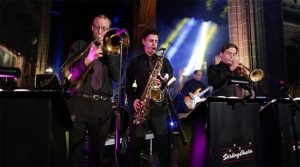
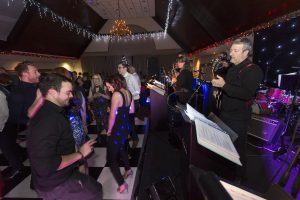
Main entertainment / dance floor music. This is where a live band for a party earns its place — building energy, reading the room, and adapting on the fly in a way a fixed playlist can’t.
Tribute and theme sets. For events with a specific identity — an American evening, a French chanson night, a British classics set — the music needs to do more than play; it needs to tell a story. I cover this in more depth in my post on tribute shows in Israel and why they work.
What Kind of Event Are You Planning?
Weddings. Probably the event type where music matters most, because the emotional stakes are highest and the schedule is tightest. I wrote a separate piece on choosing a real, varied band for a wedding — it’s still the post I’d point a couple to first.
Municipal and cultural center events. Israeli היכלי תרבות and מתנ”סים have their own rhythm — often a mixed-age, mixed-background audience, a fixed budget, and a need for material everyone in the room recognizes. My Golden Voices, Country Roads and Chanson d’Amour shows were built specifically with this kind of room in mind.
Corporate events. Less about the dance floor, more about tone — sophisticated, professional, but still alive in the room rather than piped in through speakers.
Private parties. The most flexible category, and often the most fun — this is where I get the most freedom to build something genuinely tailored.
My Own Difference: Trilingual Repertoire
One thing that consistently surprises people is the range I can draw from in a single set: English, French and Hebrew, moving between them naturally rather than as a gimmick. Twenty-plus years performing in the UK and France, combined with growing up steeped in British and American songbook traditions, means a French chanson can sit comfortably next to a Beatles classic and a Hebrew favorite in the same evening — which matters enormously for Israel’s genuinely multicultural private and municipal events.
Choosing the Right Lineup
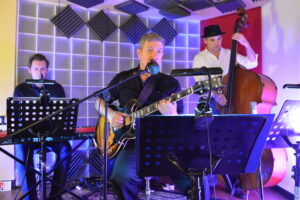
Not every event needs a six-piece band. Sometimes a single guitar and voice is exactly right; sometimes you need a full rhythm section to fill a hall. I generally scale the lineup — duo, trio, or full band — to the room size, the budget, and the job the music needs to do, rather than defaulting to “bigger is better.”
How to Plan the Music for Your Event
If you want a step-by-step breakdown of the planning process — timeline, communication with the band, what to send me in advance — I wrote a hebrew guide here: how to plan live music for your event.
In Short
Music for events isn’t one thing — it’s reception music, background music, dance-floor energy, and sometimes a themed story, all under one roof, often in one night. My job is figuring out which combination your event actually needs, then delivering it live, in whichever language and style fits the room.
If you’re planning something — a wedding, a municipal event, a corporate evening, or a private party — I’d be glad to talk through what would actually work for your specific event. Get in touch here.